
God's Blueprint for Worship: Outer Court, Holy Place & The Most Holy Place | 02

Scripture:
“9: And you shall make the court of the tabernacle. For the south side there shall be hangings for the court of fine woven linen, one hundred cubits long for one side…”Exodus 27:9.
In this article:
- The Fence and Gate: One Way In
- The Bronze Altar: Where Sin Meets Mercy
- The Laver: The Call to Cleansing
- The Holy Place – Daily Communion with God
- The Golden Lampstand – The Light of the World
- The Table of Showbread – The Bread of Life
- The Altar of Incense – The Fragrance of Prayer
- The Most Holy Place – God’s Throne of Grace
- The Veil – A Barrier Torn by Grace
- The Ark of the Covenant – God's Covenant and Presence
- The Mercy Seat – Where Justice Meets Grace
- The Shekinah Glory – God's Dwelling Presence
Before one could enter the sanctuary proper — before the Table of Showbread or the Ark of the Covenant — the worshiper first encountered the Outer Court. This was not merely a transitional space;
it was where the journey into God’s presence began.
The Outer Court was enclosed by a white linen fence, supported by bronze pillars set into bronze sockets, measuring approximately 150 feet long by 75 feet wide (Exodus 27:9–19). It surrounded the sacred space, setting it apart from the ordinary.
Inside this space stood two key pieces of furniture: the Bronze Altar of Burnt Offering and the Bronze Laver of Cleansing. Together, they presented a powerful picture of the gospel: sacrifice for sin and purification for service.
The Fence and Gate: One Way In
Scripture: Exodus 27:9–19; John 10:9

At the eastern side of the court stood the only entrance — a wide gate woven from blue, purple, and scarlet threads into fine white linen. The colors were deeply symbolic: blue for heaven, purple for royalty, and scarlet for blood — pointing unmistakably to Christ.
This single gate reinforced an eternal truth: there is no other way into God's presence but through His appointed door.
“I am the door. If anyone enters by Me, he will be saved…” (John 10:9)
The Bronze Altar: Where Sin Meets Mercy
Scripture: Exodus 27:1–8; John 1:29
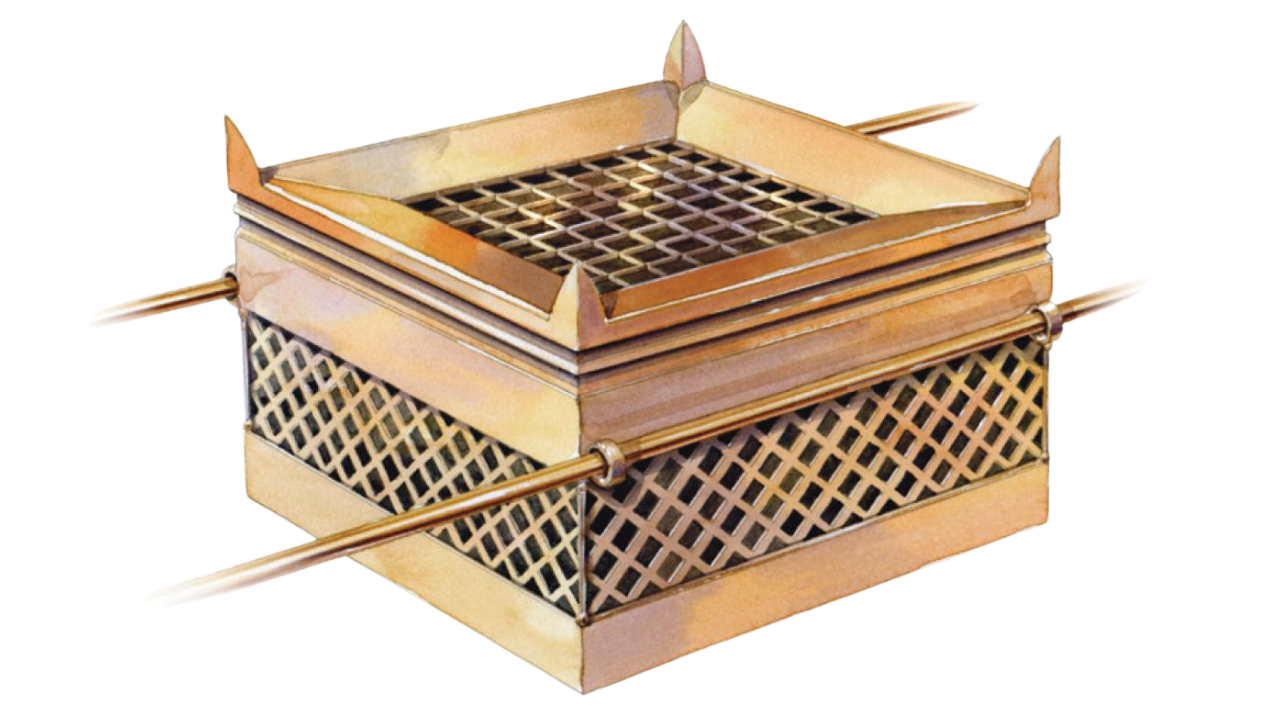
Immediately after entering the gate, the worshiper was confronted by the Bronze Altar of Burnt Offering. Made of acacia wood overlaid with bronze, it measured about 7½ feet square and 4½ feet high. The horns on each corner symbolized power, protection, and salvation.
Animals were sacrificed here, their blood poured out to atone for sin. The altar reminded Israel — and reminds us — that approaching a holy God requires atonement.
“Behold, the Lamb of God, who takes away the sin of the world.” (John 1:29)
This altar foreshadowed the cross of Christ, where the perfect Lamb was offered once for all. It was here, at the altar, that guilt was exchanged for mercy.
The Laver: The Call to Cleansing
Scripture: Exodus 30:17–21; John 13:8

Past the altar, nearer to the entrance of the Holy Place, stood the Bronze Laver. It was fashioned from polished mirrors donated by the women, making it a basin that not only held water but reflected the face of anyone who approached.
Priests were required to wash their hands and feet before ministering in the Holy Place — or face death. The laver symbolized the need for ongoing spiritual cleansing, even after sacrifice.
Jesus echoed this symbolism when He said:
“Unless I wash you, you have no part with Me.” (John 13:8)
The laver points to sanctification — the continual work of the Holy Spirit cleansing us from the defilements of life and preparing us for deeper intimacy with God.
Personal Reflection
Stand today at the gate of God’s sanctuary.
See the whiteness of the linen fence. Feel the weight of sin at the altar. Look into the laver’s mirror.
Hear the call of grace:
“Come. Be washed. Be made whole. Draw near.”
Will the journey be made? Will the heart be surrendered?
Today, the way is open. The blood is shed. The water is ready.
Come, and enter in.
The Holy Place – Daily Communion with God
Scriptures: Exodus 25:23–40; Exodus 30:1–10; Exodus 27:20–21; Leviticus 24:5–9; John 6:35; John 8:12; Revelation 5:8; Psalm 141:2
“You shall set the bread of the Presence on the table before Me always.” — Exodus 25:30 (NKJV)

Beyond the outer court stood the tabernacle structure itself — a holy space veiled in mystery and meaning. As the priest stepped through the veil into the Holy Place, he entered into a realm of daily ministry, where every detail spoke of the believer’s walk with God.
This sacred chamber was a place of ongoing communion — where light shone, bread was eaten, and incense rose. While the outer court spoke of justification, the Holy Place speaks of sanctification — the daily rhythm of walking with God in spiritual intimacy.
Here we discover how God sustains us through illumination (lampstand), nourishment (showbread), and communion (incense). Together, they form a powerful picture of the believer's life in Christ.
The Golden Lampstand – The Light of the World
Scriptures: Exodus 25:31–40; Exodus 27:20–21; John 8:12

To the south side of the Holy Place stood the magnificent Golden Lampstand (Menorah), crafted from a single piece of pure gold. It featured a central shaft with three branches on each side, forming seven lamps in total — all fashioned with almond blossom motifs, symbolizing life and awakening.
The lamps were tended every morning and evening (Exodus 27:20–21), kept burning with pure olive oil to ensure the sanctuary never sat in darkness.
“I am the Light of the world. Whoever follows Me will never walk in darkness…” (John 8:12)
This lampstand represents Jesus as the Light, the Holy Spirit’s presence, and the Church bearing His light in a dark world. Its continual flame reminds us that our spiritual lives need constant tending — through devotion, Scripture, and worship.
The Table of Showbread – The Bread of Life
Scriptures: Exodus 25:23–30; Leviticus 24:5–9; John 6:35

On the north side of the Holy Place stood the Table of Showbread, made from acacia wood overlaid with gold and crowned with a decorative border. Upon it were placed twelve unleavened loaves, representing the twelve tribes of Israel.
Every Sabbath, the bread was replaced with fresh loaves, and the priests were permitted to eat the previous week's bread in a holy place (Leviticus 24:5–9). This ritual was a weekly reminder of God's faithful provision, fellowship, and presence.
“I am the Bread of Life. He who comes to Me shall never hunger…” (John 6:35)
Jesus fulfills the symbolism of the showbread. He is the living bread, broken and given for us. And He invites us not only to behold Him — but to partake of Him, daily.
The Altar of Incense – The Fragrance of Prayer
Scriptures: Exodus 30:1–10; Psalm 141:2; Revelation 5:8

Standing directly in front of the inner veil was the Altar of Incense — a small, square altar, made of acacia wood overlaid with gold. Though modest in size, it held a profound place in the sanctuary's symbolism.
Twice daily, the priest would burn a special mixture of incense, made from stacte, onycha, galbanum, and pure frankincense (Exodus 30:34–38). This holy blend was not to be used for any common purpose — it was uniquely devoted to the worship of God.
The fragrance would fill the Holy Place, symbolizing the prayers of God’s people rising continually before Him.
In Revelation 5:8, golden bowls full of incense are identified as “the prayers of the saints,” and in Hebrews, Christ is portrayed as our Great Intercessor, offering continual prayers on our behalf.
Personal Reflection
The invitation still stands. The lampstand is lit. The table is set. The incense rises.
Will the soul draw near today?
Will the heart step past the outer court distractions and into the golden chamber of daily communion?
God’s presence waits—not for moments of emergency, but for moments of love.
The Holy Place beckons: Come daily. Come deeply. Come dwell.
Reflection Questions:
- Is your prayer life more of an occasional fire or a continual fragrance?
- What prayers do you need to bring persistently before God today?
- How does it comfort you to know Christ is interceding for you?
The Most Holy Place – God’s Throne of Grace
Scriptures: Exodus 25:10–22; Leviticus 16; Hebrews 9:1–12; Matthew 27:51; Revelation 11:19

At the heart of the tabernacle — behind a thick veil — lay the Most Holy Place, also known as the Holy of Holies. This small, perfect cube (15 x 15 x 15 feet) was the most sacred space on earth. It was here, above the Ark of the Covenant, between the wings of the cherubim, that the glory of God — the Shekinah — dwelled.
Access was restricted to only one person, the high priest, and only on one day each year — the Day of Atonement (Yom Kippur). It was a place of divine presence, judgment, mercy, and atonement.
Today, through Christ, this once-forbidden space has become our invitation — not into terror, but into intimacy with the living God.
The Veil – A Barrier Torn by Grace
Scriptures: Exodus 26:31–33; Matthew 27:51; Hebrews 10:19–20
The veil that separated the Holy Place from the Most Holy was made of blue, purple, and scarlet thread, woven into fine linen with embroidered cherubim — guardians of God's holiness.
This veil represented separation between God and man, caused by sin. For centuries, no one but the high priest dared go beyond it.
But at the moment of Jesus’ death:
“The veil of the temple was torn in two from top to bottom.” (Matthew 27:51)
The tearing of the veil signified that access to God was now open to all — not by works, but by the blood of Christ. He has made a new and living way into the Holy of Holies.
The Ark of the Covenant – God's Covenant and Presence
Scriptures: Exodus 25:10–22; Hebrews 9:4

The Ark of the Covenant was the only item in the Most Holy Place. It was a wooden chest overlaid with gold, carried by poles and never touched directly.
Inside the ark were:
- The Ten Commandments – representing God’s law and moral government
- Aaron’s rod that budded – symbolizing God’s chosen leadership
- A golden jar of manna – reminding Israel of God’s provision in the wilderness
The Ark was a symbol of God’s covenant faithfulness — a throne of both justice and intimacy.
Above the Ark sat the Mercy Seat.
The Mercy Seat – Where Justice Meets Grace
Scriptures: Exodus 25:17–22; Leviticus 16; Hebrews 9:5
The Mercy Seat was the solid gold lid of the Ark, flanked by two cherubim whose wings covered the space where God's glory appeared.
On the Day of Atonement, the high priest would enter the Most Holy Place and sprinkle blood on the Mercy Seat — making atonement for the sins of the people.
This was the holiest act in all of Israel’s worship — and it pointed to the greatest act in redemptive history: the sacrifice of Jesus, whose blood was sprinkled on the heavenly Mercy Seat once for all.
“Let us then approach God’s throne of grace with confidence…” (Hebrews 4:16)
Through Christ, we now have access to what was once unreachable.
The Shekinah Glory – God's Dwelling Presence
Scriptures: Exodus 25:22; Revelation 21:3
Above the Mercy Seat, between the cherubim, rested the Shekinah Glory — the visible manifestation of God’s presence. It was unapproachable, yet inviting. Mysterious, yet personal.
This glory represented God’s intention from the beginning — to dwell with His people.
In Jesus, we see that glory fully revealed:
“The Word became flesh and dwelt [tabernacled] among us, and we beheld His glory…” (John 1:14)
And in the end, the sanctuary vision will be complete:
“Behold, the dwelling of God is with man…” (Revelation 21:3)
Reflection Questions:
- How have you experienced God’s presence personally?
- What does “dwelling with God” look like in your daily life?
- How does the hope of eternal communion with God shape your present?
Draw Near
The Most Holy Place teaches us that God’s presence is not reserved for the few or the perfect — but for those who come through the blood of Christ.
From the veil to the ark, from the law to the mercy, from the sacrifice to the glory — every detail points us to Jesus, our High Priest, our Sacrifice, and our Access to the throne of grace.
The invitation is open:
Come. Not just into the outer court.
Not even just to the Holy Place.
But all the way in — into the Most Holy, where God waits to meet you.
Explore Our Devotionals
A Journey Through the Wilderness Tabernacle | Part 1
Foundations of God’s Dwelling Among Humanity
Yom Kippur: A day of atonement and reflection. Discover the powerful message of repentance…..

Reflecting on the Significance of Yom Kippur: A Call to Repentance and Renewal
Yom Kippur: A day of atonement and reflection. Discover the powerful message of repentance…..